Keto diets are always popping up in conversations about nutrition and weight loss. This way of eating flips the usual script and puts a real spotlight on macros. If you’re wondering why everyone talks about fat, protein, and carbs on keto, or how these macros actually work in your body, I’m breaking it down here in simple terms. I’ll share what each macro does, explain how to figure out the right balance for your goals, and throw in some practical tips that have helped me and others stick to keto with less confusion—and more success.
Why Macros Matter on Keto
The foundation of keto is changing how your body gets energy. Instead of running mostly on carbohydrates, keto switches you into using fat as your main fuel source. The trick here is tweaking your macros so your body burns fat for energy; this process is called ketosis. That’s why getting your fat, protein, and carb ratios right is super important if you want keto to work well for you.
People usually think about calories when it comes to diets, but on keto, ratios matter much more than just the overall calorie count. Keeping carbs low, boosting fat, and watching protein helps your body make this switch. Once your macros are dialed in, things start running smoother. You’ll likely notice more stable energy and, for many, less hunger throughout the day.
What Are Macros?
Macros, or macronutrients, are nutrients your body needs in larger amounts to keep things moving—think of them as the big three: fat, protein, and carbohydrates. Each one plays a different role and your body processes each of these in unique ways, so hitting the right balance is quite important, especially on keto.
- Fat: Main energy source on keto. Provides slow, steady fuel for your brain and body and keeps you feeling satisfied for longer.
- Protein: Helps build and repair muscles, supports your immune health, and keeps hunger at bay.
- Carbohydrates: Fast-burning fuel. On keto, these are intentionally kept low to make sure you stay in ketosis (the fat-burning state).
Once you check out how each macro works in your body, it’s much simpler to reach your health and fitness goals and tweak the diet to better fit your needs.
The Classic Keto Macro Breakdown
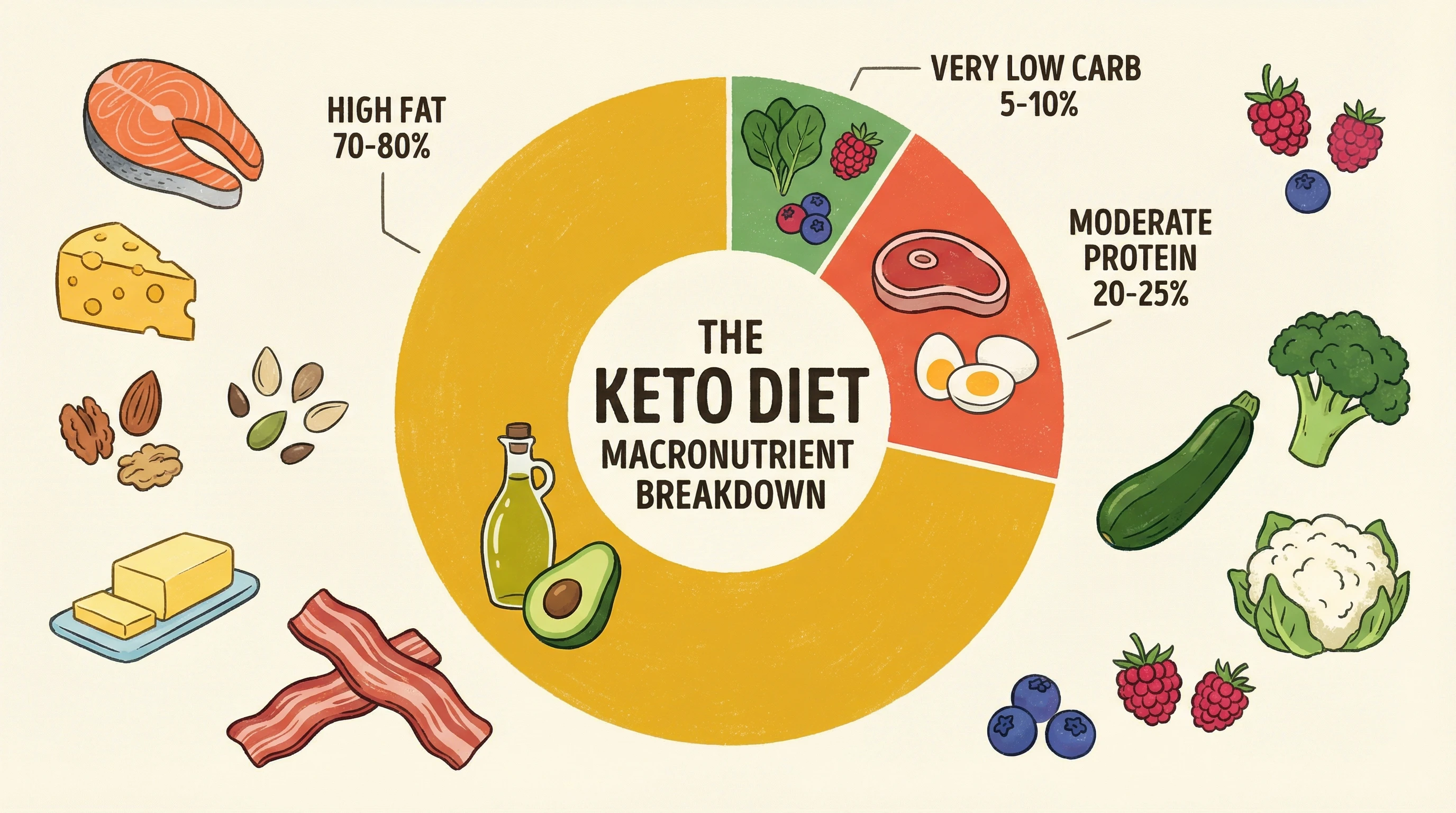
Most people following keto use this common macro split:
- Fat: About 70-75% of total calories
- Protein: 20-25%
- Carbohydrates: 5-10%
These numbers are solid starting points; they’re not rigid rules. Some find better results with slightly more or less fat or protein, depending on their individual goals and body type. The key is always keeping net carbs super low (usually under 20-50g per day) to maintain ketosis.
Fat on Keto: Your Main Fuel
Fat is the star of the keto show. When I switched to keto, I found out pretty quickly that eating more fat was not just okay—it was necessary. Instead of shying away from foods like avocado, salmon, nuts, olive oil, and butter, these become meal staples.
Dietary fat isn’t just about energy, though. It also helps your body absorb crucial vitamins and plays a big part in balancing your hormones. Healthy fats (monounsaturated and polyunsaturated) do you a lot of good, but even some saturated fat works if you’re getting it from whole, unprocessed foods.
Keto Friendly Fat Sources
- Avocados
- Coconut oil and MCT oil
- Olive oil
- Nuts and seeds
- Fatty fish (like salmon or sardines)
- Cheese
- Butter and ghee
Eating enough fat does require a bit of a mindset switch for most people, but it helps keep you feeling full, especially when carbs are super low. This one change can make sticking with keto meals much easier.
Protein: Building and Repairing
Protein is essential for muscle growth, repair, and strength—especially if you’re active or aiming to maintain muscle. But on keto, you need to find the right amount. Eating too much protein can encourage your body to convert some of it to glucose through a process called gluconeogenesis, possibly slowing down ketosis.
How Much Protein Do You Really Need?
Keto isn’t meant to be a super-high-protein diet. For most, aiming for 0.6 to 1.0 grams of protein per pound of lean body mass does the trick. The goal is to get enough for muscle support and maintenance, but not so much that it impacts your state of ketosis.
Best Protein Sources for Keto
- Meat (chicken, beef, pork)
- Eggs
- Seafood and fatty fish
- Full fat dairy
- Plant-based options like tofu or tempeh
Protein also helps keep you full and supports healthy recovery after workouts. If you exercise often, you might need a tad more to help your muscles recover, but your intake will still be moderate compared to high-protein diets.
Carbohydrates: Why Keto Keeps Them Low
This is where keto sets itself apart from most diets. On a typical eating plan, carbs are the body’s main energy source. On keto, keeping net carbs very low (usually under 20-50g per day) nudges your body to burn fat for fuel. This is how you reach ketosis, where fat becomes your primary energy source and your body burns it much more efficiently.
What Are Net Carbs?
Net carbs equal total carbohydrates minus fiber and sugar alcohols — if any are present. Fiber isn’t digested or absorbed, so it doesn’t impact blood sugar like regular carbs. That’s why you don’t count it toward your total carbs for keto.
Common Keto Friendly Carb Sources
- Leafy greens (spinach, kale, lettuce)
- Broccoli and cauliflower
- Zucchini
- Berries (in small portions)
- Cucumber
Nonstarchy veggies are your best friends on keto. They add color, flavor, and nutrients without putting a dent in your carb allowance.
How to Calculate Your Keto Macros
Calculating your personal macros might sound tricky, but it gets easier once you know what matters most. Here are the steps I recommend you follow:
- Figure out your daily calorie needs based on your specific goals; whether you’re hoping to lose weight, maintain, or build muscle. Free online calculators are a huge help here.
- With your calorie target in mind, set your carbs low (aim for 20-50g net carbs per day).
- Determine your protein needs by multiplying your lean body mass in pounds by 0.6–1.0 grams.
- The remaining calories can be filled with healthy fat sources.
Macro tracking apps like Carb Manager or MyFitnessPal come in handy for tracking daily numbers, especially while you’re still getting the hang of estimating serving sizes and macros by sight.
Challenges and Tips for Staying On Track
Tracking macros and maintaining consistency can be a challenge, particularly if keto is new for you. Here are a few common problems—and some tips to work through them:
- Eating Out: Restaurant dishes aren’t designed for keto, but most places will swap out potato or bread for salad or extra veggies if you check in with them. It’s also smart to look for hidden carbs in sauces and dressings by asking questions or doing a quick look-up.
- Hidden Carbs: Sauces, processed deli meats, or even spice mixes can have sugar or extra carbs. Reading labels really helps you spot these extras.
- Hitting Your Fat Goals: Drizzle olive oil on veggies, snack on nuts, or add avocado and cheese to your meals to boost fat intake without weighing down your food.
- Plateauing: Hitting a weight loss plateau is totally normal. Adjusting fat or carb targets, sizing up your portions, or being more active often gets things moving again.
Sticking with tracking, meal prepping, and keeping a few go-to snacks on hand can keep you on track and help keto fit into your routine. Eventually, you’ll get used to it and it won’t feel like effort.
Macros in Everyday Keto Meals
Seeing sample meals is one of the most helpful things when starting out. Here’s how a typical day of keto macro balancing might look:
- Breakfast: Scrambled eggs cooked in butter with spinach and a couple slices of bacon
- Lunch: Chicken salad with avocado, olive oil dressing, and leafy greens
- Dinner: Salmon fillet with roasted broccoli (with olive oil drizzled on top) and a small handful of nuts
- Snack: Cheese cube or a few almonds
By making each meal with healthy fats, moderate protein, and lowcarb vegetables, you’ll keep things in balance without a ton of calculation every meal.
Frequently Asked Questions
Question: How long does it take to get into ketosis?
Answer: Reaching ketosis can take anywhere from 2 to 7 days, depending on your metabolism, how active you are, and how closely you’re following your macro targets.
Question: Can I eat fruit on keto?
Answer: Most fruits are too high in carbs for strict keto, but small servings of berries can fit thanks to their lower sugar content.
Question: Do I have to track macros forever?
Answer: Tracking is really useful, especially in the beginning. Over time, you get better at estimating portions and making smart choices without logging every bite you eat.
Key Takeaways for Keto Macros
Dialing in your macros is a central part of keto and might be the most important piece for success. If you make friends with fat, keep your protein steady, and maintain low carbs, you can change how your body fuels itself.
With some patience, planning, and focusing on real, whole foods, understanding keto macros becomes second nature. Give it a go—the results usually speak for themselves.
We are here to help you along your journey, so if you have any questions leave them in the comment section down below. Also if you want to join in the conversation just drop a comment.